

Google released two updates back to back this month. The spam update dropped March 24. The core update followed March 27. Both are still rolling out as of this writing, and dealers across the country are already seeing ranking movement in their inventory pages.
The spam update is the one that matters most for independent dealers like the ones we work with.
Google's published spam policies now explicitly call out scaled content abuse - defined as generating large numbers of pages primarily to manipulate rankings rather than to help users.
Two tactics that have been common in automotive SEO for years fall directly into that bucket: mass-generated price bracket pages and templated city pages built to target nearby zip codes. Plenty of platform vendors still sell those features. That doesn't make them safe to use right now.
Here's what still works.
1. Get Your Google Business Profile Right Before You Do Anything Else
Most of the tactics on this list affect how you rank in organic results. Your Google Business Profile controls whether you show up in the map pack - which appears above organic results for most local dealer searches. A dealer that ranks 6th organically but appears in the map pack is winning that search.
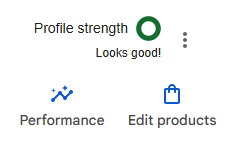
Fill out every field. Use your exact legal business name (no keyword stuffing in the name field). Upload at least 20 photos covering your lot exterior, interior, and staff. Write a complete business description that says specifically what you sell and where you are.
Then keep it active. Post once a week. Update your hours every time they change, including holidays - Google tracks GBP activity as a freshness signal.
Respond to every review. Add your inventory categories under Services. These aren't optional extras - they're signals Google uses to decide how current and legitimate your listing is.
2. Build a Dedicated Page for Each Body Style You Carry
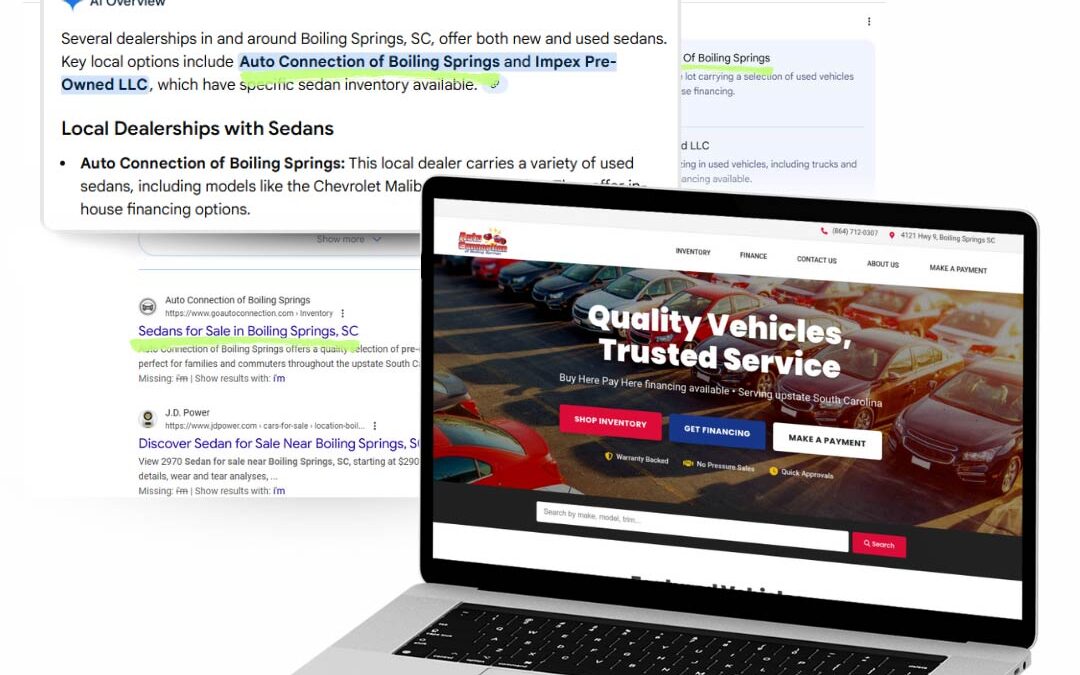
Most dealers miss this entirely. Google Business Profile has a Products feature that lets you create individual product listings inside your GBP. Create one for each body style you carry - SUVs for sale, trucks for sale, sedans for sale - write a real description for each, and link each one to the corresponding body style page on your website.
A dedicated page for trucks, one for SUVs, one for sedans is what ranks for those searches. Your general inventory page won't.
Each page needs its own title tag, its own H1, and at least 200 words of real copy. Write it the way a salesperson would explain it: who typically buys this type of vehicle, what they're usually looking for, what you carry. That's the content Google can actually evaluate.
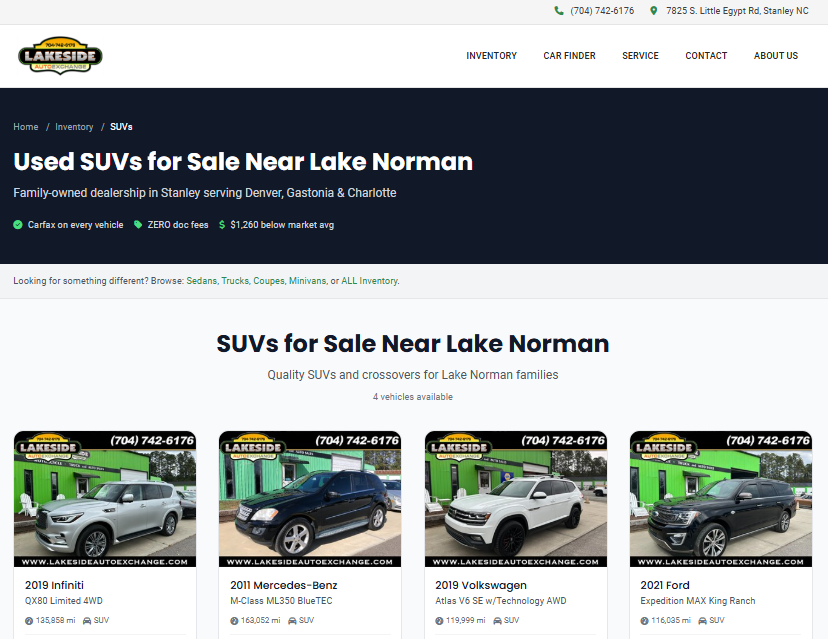
A page that pulls an inventory feed with no surrounding copy is thin content. Thin content doesn't rank, and after the March updates, it's more likely to drag down your other pages as well.
If you're running a dealer website through KGI, these body style pages are something we build into the site structure from the start.
3. Create GBP Posts for Each Vehicle Type (and Share Them to Social)
Google sunset Vehicle Listings, so the old approach of linking your GBP directly to individual VDPs is dead. The same idea still works, just at the category level - GBP Posts for each vehicle type, linked to the corresponding inventory page on your website.
Posting at the category level is just a smarter use of your time. Body-style searches are broader, which means more people see the post, and you cast a wider net than any single VIN ever could.
It also has staying power. Your inventory turns over every 60 to 90 days, but you'll always have SUVs, you'll always have trucks, you'll always have sedans. A post built around a category stays relevant the whole time you're in business.
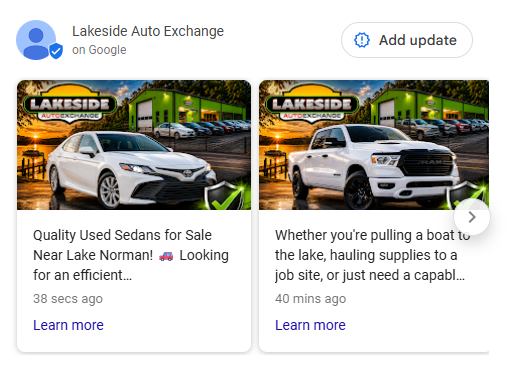
The post image is where ChatGPT helps. Upload your dealership logo, a photo of your lot, and tell it the vehicle type you want featured. It generates a clean branded image for each category - SUVs, trucks, sedans, family-friendly, under $15K, whatever filters your inventory page supports. One post per category, linked to that category's inventory page on your site.
The same image and copy then go up on Facebook and Instagram. Two recent things make that worth doing: Google now pulls social posts into the Google Business Profile panel when your dealership shows up in search, and top-of-funnel buyers are clicking through to those posts before they ever land on a specific VIN. You're reaching them earlier and from more directions with the same piece of content.
4. Write a Unique Description for Every Vehicle
This is the single biggest thing a dealer can do, and almost nobody does it consistently.
Most platforms pull window sticker data and display it as the vehicle description. That's a spec sheet, not content. Google treats it as thin - and when every dealer on the same platform has the same generated copy, it's also duplicate content.
Here's a practical way to do this without burning hours: stand in front of the car, record a 60-second voice note using your phone's dictation app. Talk about what's actually notable - the one-owner history, the full service records, the fact that it came in on trade from a local contractor.
Run that transcript through AI to turn it into a clean 100-150 word description. About three minutes per vehicle and the page now has something Google can read.
5. Post on Social Media Consistently - It Shows Up in Search Results
Most dealers treat social media and SEO as two separate buckets. They're not.
Google pulls Instagram posts directly into search results for local business queries. Posts you make inside your Google Business Profile appear in the map pack listing. Facebook group activity in local community groups gets indexed.
Google also rolled out a new "Social Media Updates" carousel that displays your latest social posts directly on your Business Profile. Two things make that worth acting on for car dealers:
- Connect your social profiles to your GBP so the carousel actually populates with your content.
- Post about what you sell - financing options, vehicle types, current inventory, BHPH approvals - not just shop photos and lifestyle content. AI systems use that language to figure out what your dealership does and who to recommend you to.
You don't need a content agency. Post each vehicle when it hits the lot - a photo, a price, two sentences about what makes it worth looking at. Share it to your GBP, your Instagram, and any local Facebook groups where it fits. Three placements from one piece of content, and each one signals to Google that your business is active, local, and current.
6. Add Schema Markup to Your Key Pages
Schema markup tells Google exactly what your pages contain without making it guess. LocalBusiness schema on your contact page confirms your name, address, phone number, and hours. Vehicle schema on your inventory pages can surface year, make, model, mileage, and price directly in search results.
It's worth implementing - but keep it in perspective. With AI getting better at reading and understanding page content directly, schema carries less weight than it did three years ago. Think of it as a backup signal that reinforces what your content already says clearly, not a shortcut around writing that content in the first place.
If your current dealer website doesn't support schema markup out of the box, that's worth asking your provider about. Our dealer websites include schema markup as part of the standard build.
7. Ask for Reviews in Person - Not by Email Three Days Later
Google counts review volume and recency as local ranking signals. Buyers read reviews before they decide whether to make the drive to your lot. Both things are true and both matter.
Most dealers send a follow-up email a few days after the sale. Most of those emails get ignored.
Ask in person, before the customer leaves the lot, while they're still happy about the deal. A direct ask at the right moment converts far better than any automated sequence.
The KGI DMS prints a sheet with your deal paperwork with the Google review QR code on it so customers can easily scan and complete their review. Suggest taking a photo of them with their new vehicle using their phone so they can post it to the review!
Respond to every review within 48 hours - including the negative ones. Especially the negative ones. A calm, professional response to a 2-star review tells every future buyer more about how you operate than 50 unchallenged 5-star reviews ever could.
8. Get Walk-Around Videos on Your Vehicle Detail Pages
A 90-second walk-around video on a vehicle detail page increases time on page, reduces bounce rate, and gives buyers something photos can't - a real look at the actual car from someone who knows it. All three of those things are signals Google watches when evaluating page quality.
Shoot them on a phone. Keep them under two minutes. Talk through what you'd want to know if you were buying it. Embed the video at the top of the VDP above the photo gallery.
You don't need production quality. You need to give the buyer who can't be there in person a reason to stay on your page and pick up the phone.
What the March 2026 Updates Are Actually Saying
The dealers who get hurt by algorithm updates are usually the ones who built their SEO on volume - more pages, more keywords, more templated content that looks like it's for users but is really for search engines. Google's spam policies now name that practice directly and penalize it.
The dealers who come through these updates in better shape are the ones whose pages exist because a buyer actually needs them - specific vehicles described in real language, a GBP that reflects a business that's open and active, and reviews that came from real customers who were treated well.
That's always been good business. It's now also the safer SEO strategy.
KGI Dealer Solutions builds websites and marketing tools for independent used car dealers in the Carolinas. If you want to talk through what your current site is doing for you in search, reach out here.